

In November last year, after 13 years of grueling search, a group of Indonesian and foreign scientists witnessed the rediscovery of Cendawan Muka Harimau, or Rafflesia hasseltii—an exceptionally rare corpse lily long feared to be extinct—deep in a West Sumatran rainforest. The video of Septian Andriki, one of the scientists, tearing up with joy went viral on the internet. This long-term scientific effort is a collaboration between the National Research and Innovation Agency (BRIN), University of Bengkulu, and Komunitas Peduli Puspa Langka Bengkulu, supported by the Oxford Botanic Garden. The rediscovery affirms Indonesia’s position as the country with the highest Rafflesia diversity in the world, alongside the Philippines.
For centuries, Indonesia has drawn scientists and explorers from around the world with its extraordinary biodiversity and rich ecological landscapes: from tropical forests, volcanoes, to vast oceans. It is in this spirit, Indonesia has been described as “the laboratory of the world”, a phrase proposed as a national narrative by Bagus Muljadi, an Indonesian professor at the University of Nottingham. He emphasized that Indonesia possesses a lot of local knowledge, wisdom, and the potential to answer the world’s most pressing scientific problems —but only if we play our cards right.
Currently though, we have a very limited commitment and infrastructure needed to cultivate our own scientific enterprise. This is exacerbated by an enduring inferiority complex rooted in our colonial history. The narrative of science and technology as the invention of Europe and then brought to the rest of the world mostly by conquest and the formation of a colony has long been a widely believed theory. For example, George Basalla wrote a paper titled “The Spread of Western Science” (1967), where he claimed that modern science spread out from western to non-western countries in three stages:
i) A contact of non-scientific society outside Europe with European explorers through colonialism, religious missionary, or trades
ii) the establishment of colonial science
iii) the said society achieved independent scientific tradition
Such an oversimplistic theory has been demonstrated to be false and outdated. For instance, Prof. James Poskett wrote a book titled “Horizons: A Global History of Science”. Using examples spanning many civilizations and geographical regions, he argues that modern science is not a unique product of European culture. Instead, it took shape through two-way interactions between the indigenous and the European explorers, not just through a one-way conquest. Modern science, therefore, has always depended upon bringing people together and fertilizing different ideas across different cultures.
At the same time, Poskett also pointed out that the discourse about scientific contributions from outside of the western world often points toward the distant pasts, such as the ‘medieval Islamic golden age’ or similarly for ancient Chinese and Indian civilizations. But these only reinforce the narrative that non-western civilizations have little contribution to modern science. The reality is that indigenous communities also contribute to the development of modern science. But their contributions are often overlooked or erased, sometimes deliberately but often also unintentionally, due to the Western-centric perspective of historians in the colonial era.
Indonesia is now an 80-year old nation, and yet we are still grappling with our own history. At the same time, we are also forging our post-colonial identity in a globalized world built on science and technology. To decide our future trajectory, it is important to revisit the largely forgotten Indonesian scientific figures in the colonial era—those often pushed to the margins of history books—and reflect on whether Indonesia today truly fosters the scientific talents that our future so critically depend on.
Overlooked indigenous scientists in the colonial rule
There was a brief drama caused by Oxford’s reporting of the rediscovery of Rafflesia Hasselti. The Oxford public relation team conveniently forgot to recognize the Indonesian team, and only mention the leader of the Oxford Botanic Garden. After pressures mounting from Indonesian on social media, Oxford relented and edited their press release to also include Septian Andriki and the team.
Sadly, this is not the first time contribution from indigenous scientists has been omitted. In the colonial era, the credit to a scientific “discovery”, such as new species of plants and animals in the regions under European colonies, is often attributed to the European explorers. This is despite the fact that the locals might already be aware of them, or that they actually played important roles in the discovery. Such a narrative serves to marginalize the humanity and intellectual capability of the indigenous people, which in turn is used to further legitimize the existence of colonial entities.
The evidence for this is available from the written records published by the western explorers themselves. Instead of them “enlightening” the locals about western science, they often expressed fascination toward the local’s knowledge and expertise on nature. For instance, David Fairchild, an American botanist and zoologist, expressed his fascination towards the native Indonesian’s knowledge during his visit to the then Dutch East Indies in 1895. He praised Oedam, the head gardener at the Bogor Botanical Gardens as “outstanding botanist in all aspects”. Similarly, Henry Ogg Forbes, a Scotland scientist who studied tropical plants and animals in the Dutch East Indies (1878 - 1883), praised the people of Banten as “highly intelligent and amazing observers”. There is also scholarly evidence, compiled by Adam Bobbette in his book The Pulse of the Earth (the book has been translated to Indonesian in Denyut Nadi Bumi), suggesting that the modern understanding of volcanoes as a consequence of plate tectonic activity was strongly enabled by Javanese spiritual and political structures in the 19th and 20th centuries.
The overall trend on knowledge exchange and indigenous contribution is consistent. Let’s focus on one remarkable, but also tragic, story of Achmad Mochtar, whose name was mentioned in the WIUI Podcast with a historian Peter Carey:
Prof. Achmad Mochtar: Indonesian Pioneering Scientist and His Struggle Against Colonialism
Achmad Mochtar was born in 1890 in Bonjol, West Sumatera. He graduated from STOVIA, a medical school in Batavia (now Jakarta) in 1916, and then served as a doctor in a remote region of Mandailing Natal in North Sumatra. While he was there, he encountered Wilhelm Schüffner, a German scientist who was working to cure Malaria. Mochtar and Wilhelm worked together, and Wilhelm became his mentor. With Wilhelm’s help, Mochtar got an opportunity to pursue a doctorate (Ph.D) at the University of Amsterdam.
In 1927, Mochtar defended his Ph.D thesis, challenging the widely accepted idea that Leptospira bacteria cause yellow fever. He boldly went against the scientific consensus at the time by contradicting the claims of the world-renowned microbiologist Hideyo Noguchi. The finding of Mochtar would soon be vindicated by other scientists, confirming that yellow-fever is caused by mosquito-born viruses instead of bacteria.
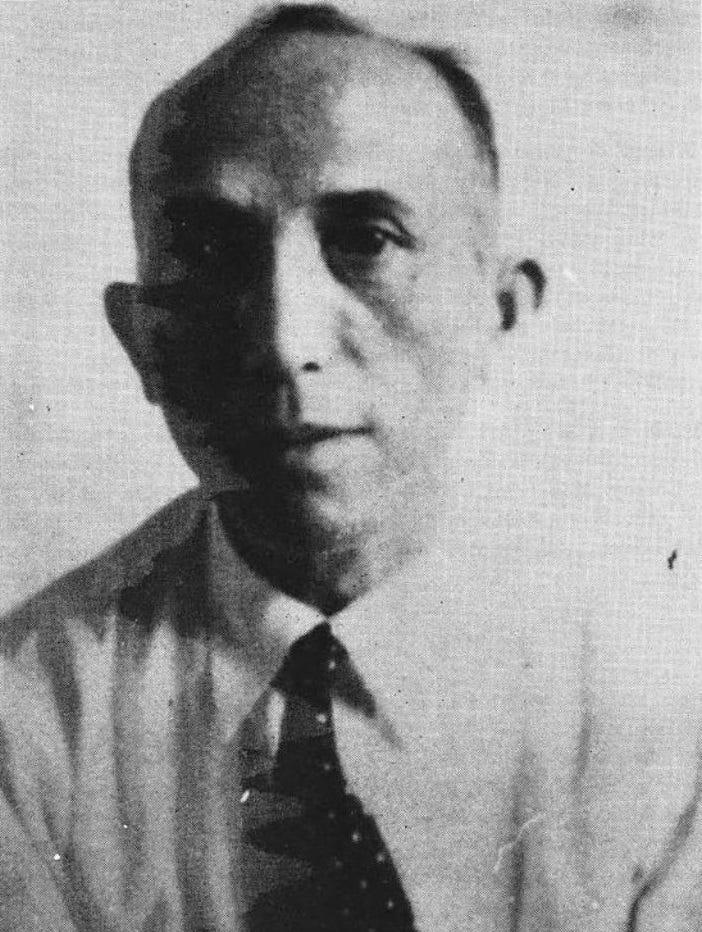
To put things into context, all of these were happening in 1927. Mochtar managed to earn his PhD when the majority of native Indonesian were still uneducated (even now, only 1% of Indonesian hold a Ph.D degree). The 1920s were the time of huge national awakening; with Sarekat Islam amassing millions of members, Semaun started the Indonesian Communist Party, and the Indonesian university students in Leiden started a nationalist rebellion.
After earning his Ph.D, Dr. Mochtar came back to Indonesia and worked at the Eijkman institute, founded by a Nobel-prize winning scientist Christian Eijkman, where he continued to prove his competence as a scientist. He published 25 research articles between 1929 - 1942 until he was chosen to be the first Indonesian director of the Eijkman institute.
Sadly, his prolific scientific career was about to be cut short. Around the same time he became the director of Eijkmann, the Japanese army invaded Indonesia. The brutality of the Japanese regime is well-documented, but there is one tragic incident that stood out for Achmad Mochtar and his colleagues at Eijkmann. Prior to this tragedy, the Japanese Army had taken over a regional center for vaccine production, in Bandung and they had administered vaccines to be given to Romusha (Indonesian slave labors) workers.
At 9 AM on August 6th of 1944, a central hospital in Jakarta had received a frantic call from a nearby Romusha camp - around 900 Romusha workers were screaming in agony while contorted into bizarre postures. The medical team suspected an acute tetanus outbreak, and they learned that all of the patients had been injected with vaccines a few days earlier. Prof. Mochtar’s laboratory was called and asked to help investigate the outbreak. He confirmed the diagnosis, and reported that the vaccines manufactured by the Japanese had contained tetanus toxins.
In October 1944, the Japanese military police (Kenpeitai) arrested Mochtar and his colleagues, along with the central hospital’s doctors and staff members. In prison, they were subjected to all sorts of torture: they had been beaten, shocked, burned, and subjected to waterboarding. After two months of brutal torture, one doctor, Dr. Arief had died in early December 1944. Survivors later recalled that the corpse of Dr. Arief had been mutilated, and was full of cigarette burns, his face was beaten beyond recognition, and his legs had splayed open.
After the incident, Prof. Mochtar communicated to fellow prisoners that their suffering would soon end and that they would return to their families. Unbeknownst to them, Prof. Mochtar had signed a confession, claiming that he had sabotaged the Japanese vaccines, in exchange for the liberty of his colleagues and subordinates. About a month after Dr. Arief had died, all those arrested were either released or transferred to regular prison, except for Prof. Mochtar.
The date was the 3rd of July 1945, less than two months before a group of ambitious independence fighters, young and old, gathered in Jl. Pegangsaan Timur to declare the independence of Indonesia. It was also the day Prof. Achmad Mochtar was beheaded. According to a Japanese officer’s diary, his body was then crushed by a steamroller and his remains were dumped into a mass grave.
A sad day for humanity.

Reshaping Indonesia’s Scientific Narratives
Achmad Mochtar’s name is now commemorated as a hospital name in Bukit Tinggi, North Sumatra. The precise location of his body is not known. However, in the Ancol War Cemetery, a grave marker bears his name: “Prof. Dr. A. Mochtar”, along with the names of other victims brutally murdered under colonial rule.
We have not done nearly enough to commemorate the sacrifice of Prof. Achmad Mochtar for his resistance to colonialism, and his pioneering role in establishing modern science in Indonesia. His story remains largely unknown beyond his immediate family, those who worked closely with him, and a small circle of historians. We should make a conscious effort to bring his story into wider public awareness—through schools, online platforms, and other public spaces—because it carries important lessons and reminds us not to take our independence for granted.
One lesson we could learn from him is to get rid of our inferiority complex. We Indonesian can be pretty damn smart when we want to. Be confident, be bold, be audacious. We should not be arrogant, but we should demonstrate that our voice matters. News about our low PISA scores and the flaws in our academic systems should not make us feel inferior. Instead, we should use them as a motivation and as a launching pad. Imagine how many hidden scientific talents like Prof. Achmad Mochtar we currently have, and yet the system fails them?
We Indonesian can be pretty damn smart when we want to. Be confident, be bold, be audacious. We should not be arrogant, but we should demonstrate that our voice matters.
Indeed, there have been many stories of Indonesians achieving extraordinary things when they are put in the right environment, including those from remote areas of Indonesia. Take countless stories of young Indonesian students who keep winning medals at international science competitions; or Dr. Yane Ansanay, the first Papuan woman who received her Ph.D in physics; or Dr. Carina Joe, one of the scientists developing AstraZeneca vaccine for COVID-19; Dr. Sandoko Kosen who is involved in an international effort to build a quantum computer, and there are countless other Indonesian figures actively and meaningfully contributing to the modern scientific discourse.
Yet, these achievements should not make us complacent. Many of us take pride in reading about Indonesians receiving international recognition for their brilliant work. Politicians are often quick to hand out awards and tokens of appreciation. But the crucial question is this:
Are these individuals excelling because Indonesian education has nurtured them, or in spite of it?After all, you can not demand flowers to grow in toxic soil.
We asked this question to Prof. Bagus Muljadi in the WIUI Podcast:
At present, Indonesia is still far from being a place that is conducive to scientific research. Bagus raised the point that the current Indonesian academic system put a lot of emphasis on conformity and regurgitating information, instead of creative thinking required by research and innovation. There is also still a lot of mental homework of dismantling “seniority” in Indonesian academic (and non-academic) discourse, since ideally science is supposed to be based on meritocracy rather than who-says-what.
And let’s be real. We only spend 0.3% of our Gross-Domestic-Product (GDP) for research and development (R&D). In comparison, Singapore spends 2% of their GDP whereas Malaysia and Thailand spend around 1% of their GDP on R&D. These numbers speak volume on our priority as a country. There is not much political willingness to move away from extraction-based economies, where local Indonesians typically work as low-pay hard laborers in extractive industries such as mining and palm oils.
Finally, we must be cautious about over-quantifying research output. Yes, accountability matters. But at the same time, scientific research is inherently a long-term endeavour that cannot be rushed. Short-term metrics such as the h-index are, at best, indirect indicators of productivity rather than measures of research quality itself. Moreover, these metrics are notoriously easy to manipulate. This has encouraged a tendency among some to “game the system” by producing large volumes of low-quality papers, inflating citations, hiring “joki”, or engaging in other questionable practices. Indonesians are undoubtedly creative, but that creativity can sometimes be misdirected toward bending rules rather than advancing genuine scientific progress.
So, we have a lot of work to do. But this is the work we must do if we want to honor the legacy of our scientific pioneers, like Prof. Achmad Mochtar, and his colleagues who endured unimaginable suffering while standing up for science, truth, and justice.
References:
Rafflesia Hasselti
Knowledge exchange between indigenous communities and Western explorers in the colonial era
Basalla, G. (1967). The Spread of Western Science: A three-stage model describes the introduction of modern science into any non-European nation. Science, 156(3775), 611-622.
Poskett, J. (2022). Horizons: A global history of science. Penguin UK.
Bobbette, A. (2023). The Pulse of the Earth: Political geology in Java. Duke University Press.
Achmad Mochtar’s story
Baird, J. K. (2016). War crimes in Japan-occupied Indonesia: Unraveling the persecution of Achmad Mochtar. Asia-Pacific Journal, 14(1), e2.
Stone, R. (2010). Righting a 65-year-old wrong. Science. https://www.science.org/doi/abs/10.1126/science.329.5987.30
Flaws in the current Indonesian academic system
https://www.science.org/content/article/how-shine-indonesian-science-game-system
Thanks for this article. I find it interesting how the author jumps from one theme to the next. The title led readers to believe that this will be about scientific funding (which is a valid and important issue), but the post veered off to indigenous scientist in the beginning (also important but covers so much more than just Mantri Oedam or western scientist’s account of indigenous science), then to Achmad Mochtar. Discussion about these is extremely important and I agree that it is extremely lacking in people’s knowledge. This doesn’t mean that this article does not jump on too many things, is it because of the lack of resources? Maybe. Indonesia’s scientific endeavour is not the most ludicrous subject. I have thoughts and opinions but I’m going to address the elephant in the room: decoloniality. How can the people ‘play our cards right’ when there is systemic oppression by the state, be it through erroneous policy, lack of funding for science, or physical oppression? Also taking account of coloniality that is engrained in the state’s system. The author talked about inferiority complex, in what context? Is it from scientists? I don’t think so, I’ve met brilliant Indonesian scientists, and the numbers aren’t little. I should think it’s about the general temperament when it comes to science. It’s not one scientist, or a group of scientists that has inferiority complex, it’s the collective temper that internalised the inferiority. All this discussion can’t be detached from discussion of coloniality. The author asks, “Imagine how many hidden scientific talents like Prof. Achmad Mochtar we currently have, and yet the system fails them?” and yet didn’t delve into why the system fails them. That is the important as well. Why is the GDP allocation for research only 0.3%? Ask why and dig deep into the biases the strings that pull these decisions in place. (Btw, the budget for research hasn’t always been this low, but again, why?) This is mostly just a rant, but I needed to express the comment. If you read this far, I appreciate it and thanks.
Great article! Thank you for the writing.
Just a biiit correction, though. Achmad Mochtar’s name is now commemorated as a hospital name in Bukittinggi West Sumatera not North Sumatera ☺️